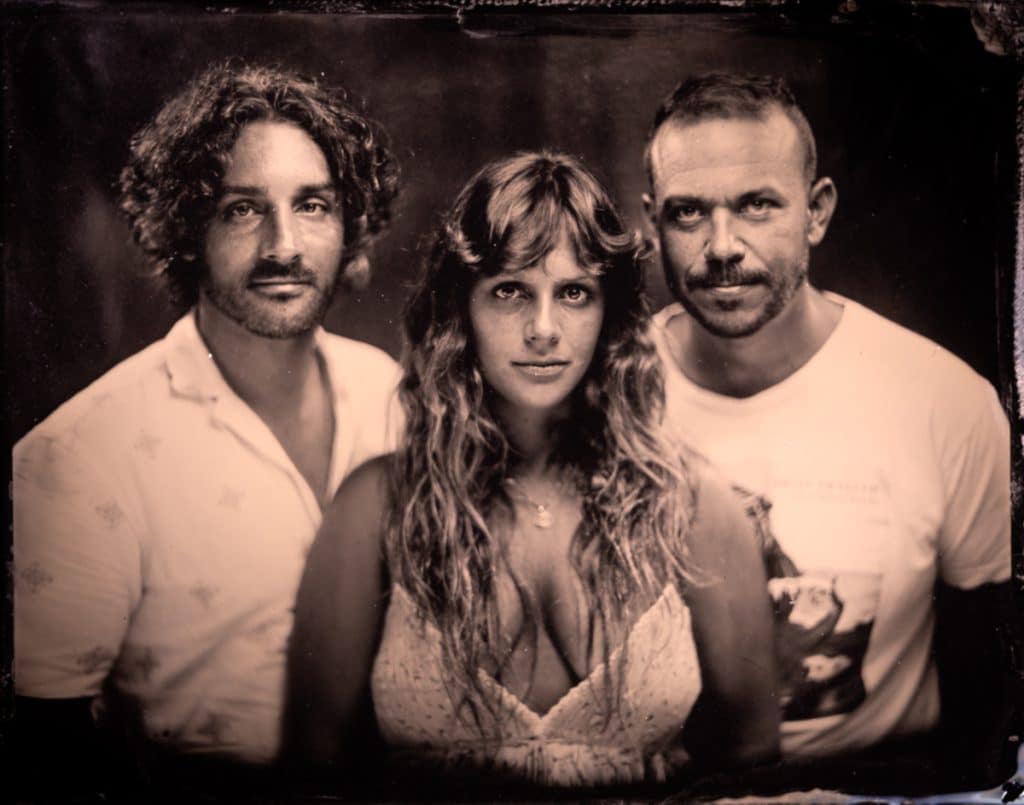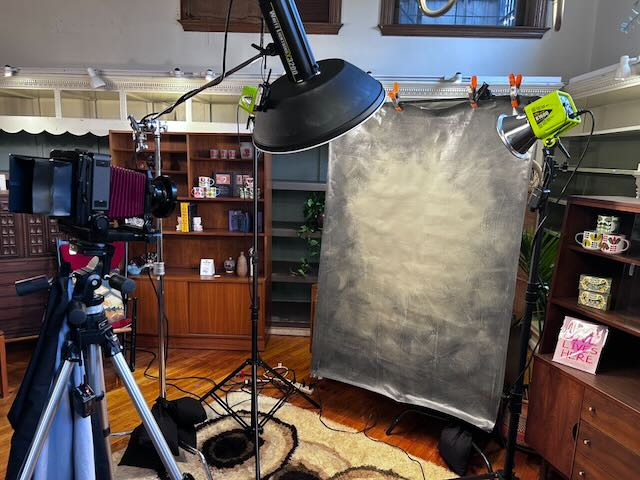
A tintype portrait pop-up is an instant, fun photo event employing a 170-year old chemical photographic process first invented in 1851. For my pop-ups, I set up a temporary photo studio on location and make photos on metal plates, just like they used to in the 19th century. Inside or at night, I set up studio lights. During nice days, I can use natural sunshine.
In the past, I’ve set up at clothing boutiques, vintage furniture stores, tattoo studios, fundraising galas, craft breweries and in city parks. The process takes about 20 minutes, start to finish, to get a 4×5 inch picture that will last for generations.
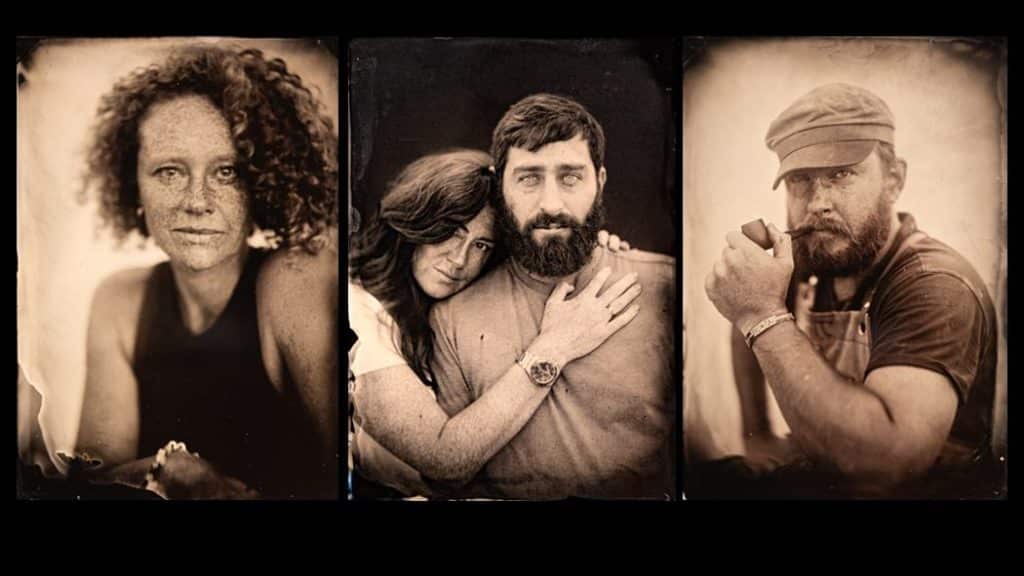
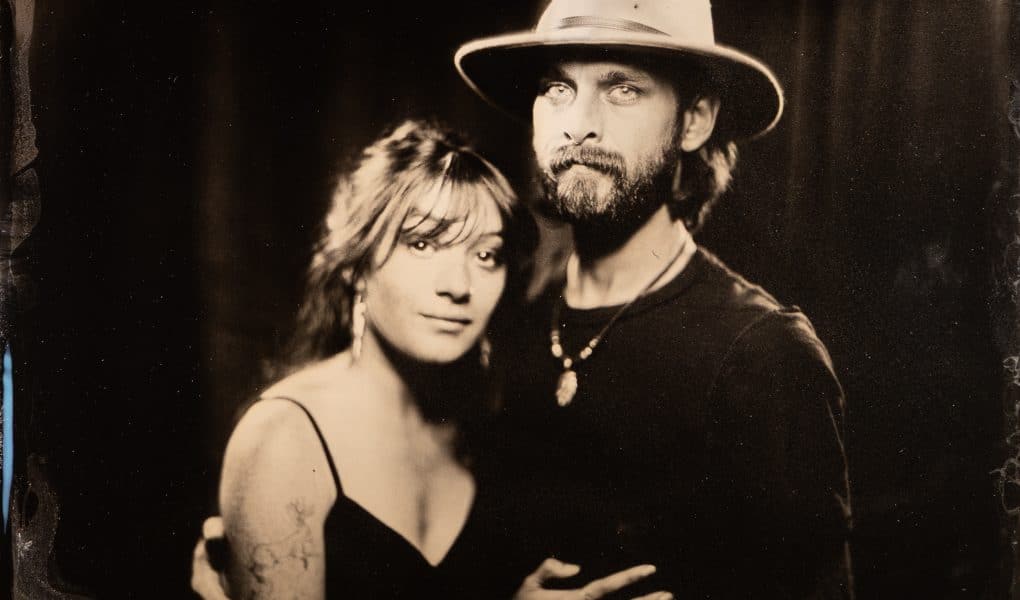
Tintypes are made via the “wet plate collodion” process. It was invented in 1851 and was the most popular method for making photos from about 1860 until the mid 1880s. It’s called “wet plate” because the metal plate must be coated, sensitized, developed and fixed in the field before it dries. There’s no shooting now and developing later, and there’s no negative. Each plate is a one-of-a-kind, handmade object of art. No two are alike and there’s always a few interesting imperfections — which is part of the fun.
The process is particularly sensitive to ultraviolet light. Therefore, anything blue often appears brighter than you’d expect and anything red or yellow comes out darker. Pale blue eyes look nearly white, pink freckles are accentuated and dark red lipstick can look almost black.

That’s what gives the pictures their slightly otherworldly look.
Outside, in a pleasant summer shade, exposures are somewhere around six seconds, which is how long you have to hold still. It’s not hard as long as we pose you leaning on a small table, the back of a chair or someone else. It can actually be a lot of fun figuring it out.
When using flashes indoors or at night, the exposure is instant.
After the exposure, I’ll immediately develop the plate and we’ll know what we have right away.
The final step is varnishing. Anything light colored in the picture is silver and can tarnish over time without the varnish. I usually varnish the plate at home and let it dry completely, before mailing or delivering it to the venue. But sometimes I varnish on the spot.